
Philomena
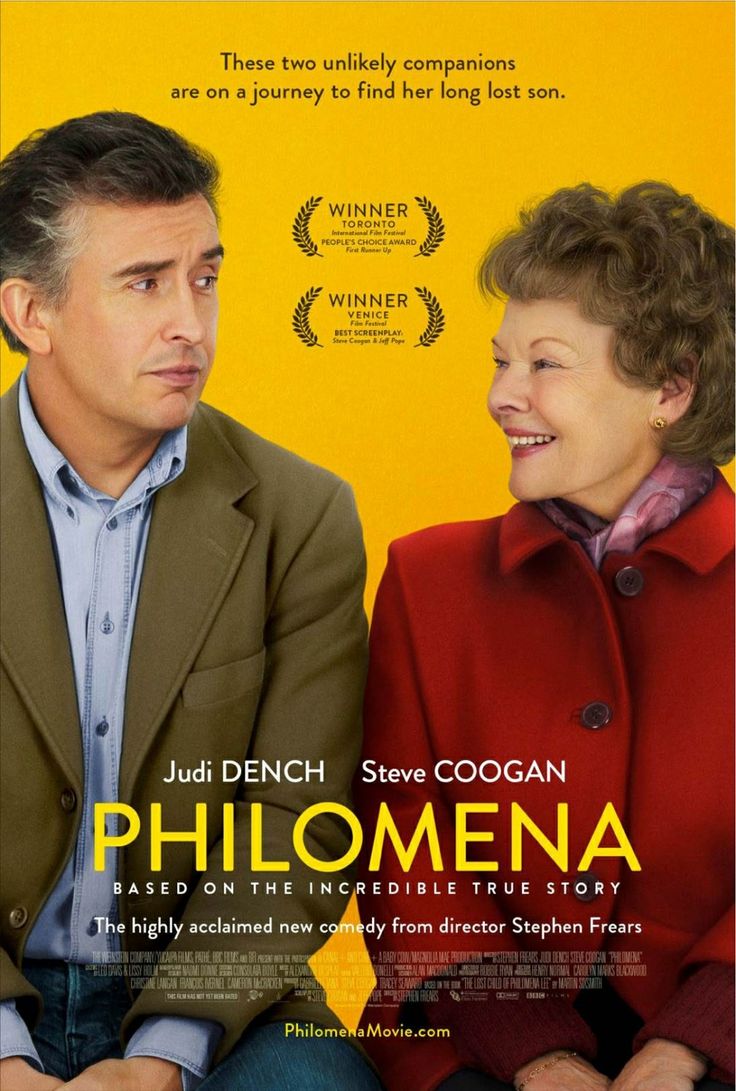
Judi Dench
Steve Coogan
Steve Coogan
Jeff Pope
98 mins.
Biography, Drama
November 27, 2013
Rated PG-13 on appeal for some strong language, thematic elements and sexual references. (MPAA)
“Philomena” is a tender film with expert execution by director Stephen Frears, screenwriters Steve Coogan and Jeff Pope, and actors Judi Dench and Steve Coogan. Their supporting cast is equally good.
At the beginning of this film, I thought that it would end up being just another nice film to watch. But, as the story progressed, this film gradually deepened and found an unexpected richness while maintaining a light touch; it grew roots. There’s nothing revolutionary here; it’s just well-done.
“Philomena” is based on a true story of an Irish mother, Philomena Lee, whose son was sold to American adoptive parents by the Catholic Church. She was forced to work for the church in order to pay the church back for the cost of taking care of her pregnancy (she was sent to Sean Ross Abbey by her father for this purpose) and was told that she sinned by having premarital sex and by having a baby. 50 years later she decides to search for her son and is aided by former BBC reporter and ousted adviser to the Labour Party, Martin Sixsmith, who hopes that this “human interest story” will re-ignite his reporting career. He’s a man who doesn’t believe in God and has a major problem with the Church’s actions. Contrastingly, Philomena maintains her Catholic beliefs and chooses to forgive.
Judi Dench and Steve Coogan, as Philomena and Martin respectively, play perfectly off of one another. Every line is landed, and the shifts between drama and comedy are well done. While Philomena is a quiet-tempered woman, Dench manages to make her peculiarities believable (she knows a lot more of the world than she seems to). Coogan does a great job of playing the counterpoint without overpowering Dench. These two are great dance partners.
The subject matter of this film naturally lends itself to manipulation, so the filmmakers wisely decided to just let the story tell itself without unnecessary embellishments. The climactic scene at the end (when Coogan delivers a great line to the main nun at fault) flirted with going too far, but they reined things in at just the right moment. Dench, once again, shows us just how good she is. Just look at her eyes in this film, starting with her very first scene when she sits silently in a candlelit chapel. She gives a master class in film acting here. She knows who she is as an actor and trusts her work completely.
And to those who believe that this film is unfair to the Catholic Church in some way: get over it; no, it’s not. Didn’t you pay attention? Philomena is a great representative of forgiveness in this film. She puts Sixsmith in his place on more than one occasion by stating plainly that she doesn’t want to be as bitter as he is. She remains a Catholic, despite everything that she was subjected to by that church. Hello?
“Philomena” has deft performances and great British wit – it has many truly funny moments – that keep the sap at bay. It’s a satisfying achievement.
Verdict: Very Good
About: (Source: philomena)
Philomena is the true story of one mother’s search for her lost son.
Falling pregnant as a teenager in Ireland in 1952, Philomena was sent to the convent of Roscrea to be looked after as a “fallen woman”. When her baby was only a toddler, he was taken away by the nuns for adoption in America. Philomena spent the next fifty years searching for him in vain.
Then she met Martin Sixsmith, a world-weary political journalist who happened to be intrigued by her story. Together they set off for America on a journey that would not only reveal the extraordinary story of Philomena’s son, but also create an unexpectedly close bond between them.
The film is a compelling narrative of human love and loss and ultimately celebrates life. It is both funny and sad and concerns two very different people, at different stages of their lives, who help each other and show that there is laughter even in the darkest places.
The book “The Lost Child Of Philomena Lee” was published in 2009. It acted as a catalyst for thousands of adopted Irish children and their ‘shamed’ mothers to come forward to tell their stories. Many are still searching for their lost families.


