
Public Morals
Created by:
Edward Burns
2015-
Crime, Drama
TNT
TV-MA
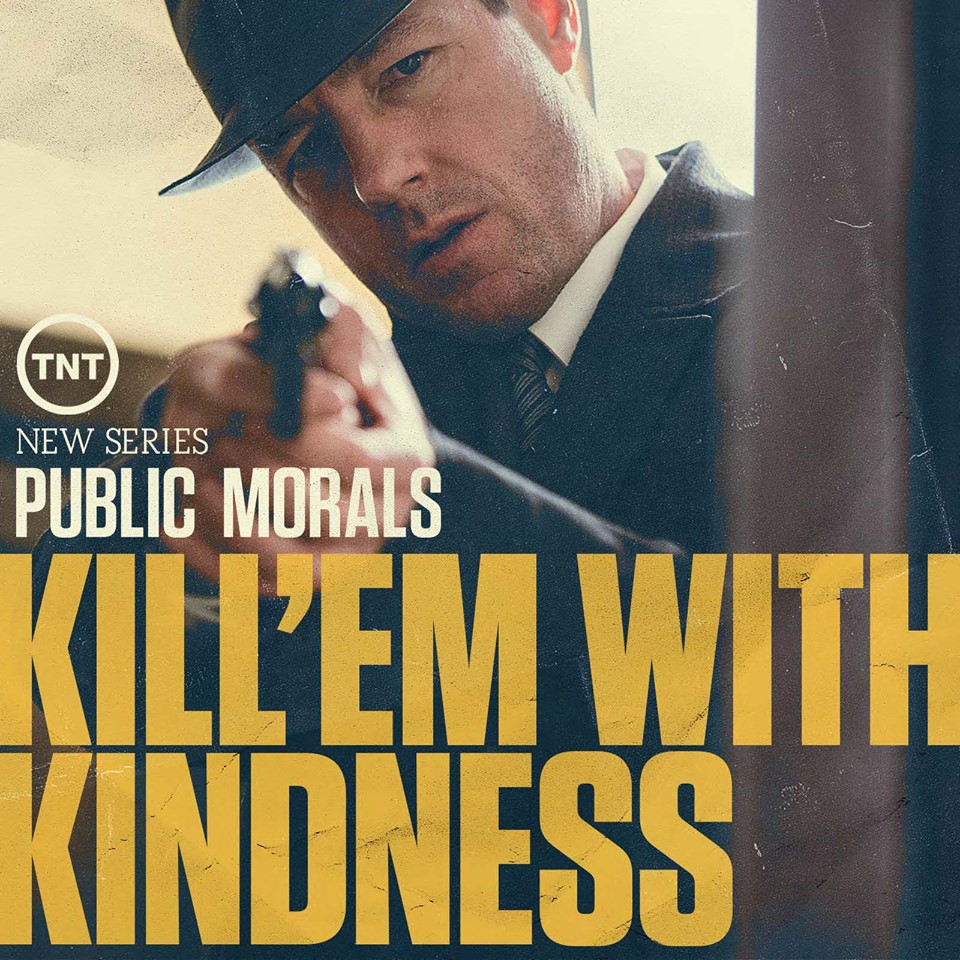
“Public Morals” has a pep in its step. Its first episode opens during nighttime in New York City with music that says, “Pay attention.” The camera’s tracking shots allow this series to sweep along. It’s stylized with an almost comic-book sensibility. “Dick Tracy” comes to mind, but this series isn’t that extreme. Not even close. It has just a whiff of that style. It also has neo-noir written all over it. Think: “L.A. Confidential,” but with a New York setting and sensibility. This is the kind of execution that I wish “Gotham” had.
Set in the 1960s, “Public Morals” focuses on the Public Morals Division of the NYPD. This division deals with vice crimes. According to main character Terry Muldoon, a seasoned officer in the division, they “manage” those crimes. (They’re victimless crimes, after all.) And by manage, he means make sure that gambling, prostitution, and the like stay in the shadows. He also means that his division gets a cut of the profits.
Edward Burns plays Muldoon and writes, directs, and produces the series. From the beginning, he introduces the viewer to the world and rules of vice crime. Of course, there’s corruption. That comes with the territory. Burns even uses the tried-and-true storytelling tactic of introducing a rookie character so that we can learn those rules through him. It’s nothing new, but it works. The same could be said of the series as a whole.
Right now, we’re used to seeing the more polished side of the 1960s on television. “Mad Men” and “Masters of Sex” are two of the best examples of that. This series, however, has a grittier take. (It’s not too gritty, though.) It mirrors Muldoon in that way. He’s a no-nonsense guy. For instance, when he finds out that his oldest son has turned into a class clown, Muldoon gets tough with him. He throws it in his son’s face every time he sees him. But when his wife asks him to soften the blows a bit, he does. He loves his son, after all. He lets up just a bit, though not too much. An even stronger example of Muldoon’s grit is his reaction to the death of his uncle, an underboss in the Irish-American mob. He has a quick verbal response when he sees the body and then moves on with his job. Time is of the essence.
And that could be the mantra of this entire series (though not in regards to the unfolding of the plot, by the way). At times, it moves to the beat of rat-a-tat dialogue. So, it certainly knows how to zip by, but it doesn’t know how to produce some sizzle. That’s the only knock I have against it. There’s no heat. It doesn’t burn. But, honestly, I’m OK with that. “Public Morals” doesn’t take itself too seriously, so being light on its feet is no crime. Actually, it’s a nice change of pace. It’s a counterpoint to most of what’s on TV right now.
Overall, Edward Burns has crafted a competent and clear vision of stylized, period-piece crime. And he executes that vision rather well. While he doesn’t do anything revolutionary, he does get the job done. So, as “Public Morals” delves deeper into mob-war territory, I just hope its wheels keep on spinning. …
As “Public Morals” progresses, it slows down a bit and loses a bit of style – just a touch. But it’s still good. It doesn’t suffer as a result. It settles into a nice dramatic rhythm, instead. I miss its opening energy, though. That made it seem somewhat fresh stylistically.
Verdict: Good
About: (Source: publicmorals)
Edward Burns writes, directs, executive producers and stars alongside Michael Rapaport and Elizabeth Masucci in this powerful police drama that will take viewers to the seedy, gritty streets and bright, seductive lights of 1960s New York. The series centers on Terry Muldoon (Burns), an officer of the Public Morals Division, which investigates vice crimes in the city. Many of Muldoon’s fellow cops in the division walk a thin line between morality and crime as vice-related temptations threaten to snare even the best of officers, including Muldoon’s partner, Charlie Bullman (Rapaport). As Muldoon watches the Hells Kitchen streets where he grew up be devoured by an escalating war within two factions of the Irish-American Mob, he becomes more determined than ever to fight back against the city’s dark underbelly so he can provide a safe place where he and his wife, Christine, can raise their family.


