
Selma
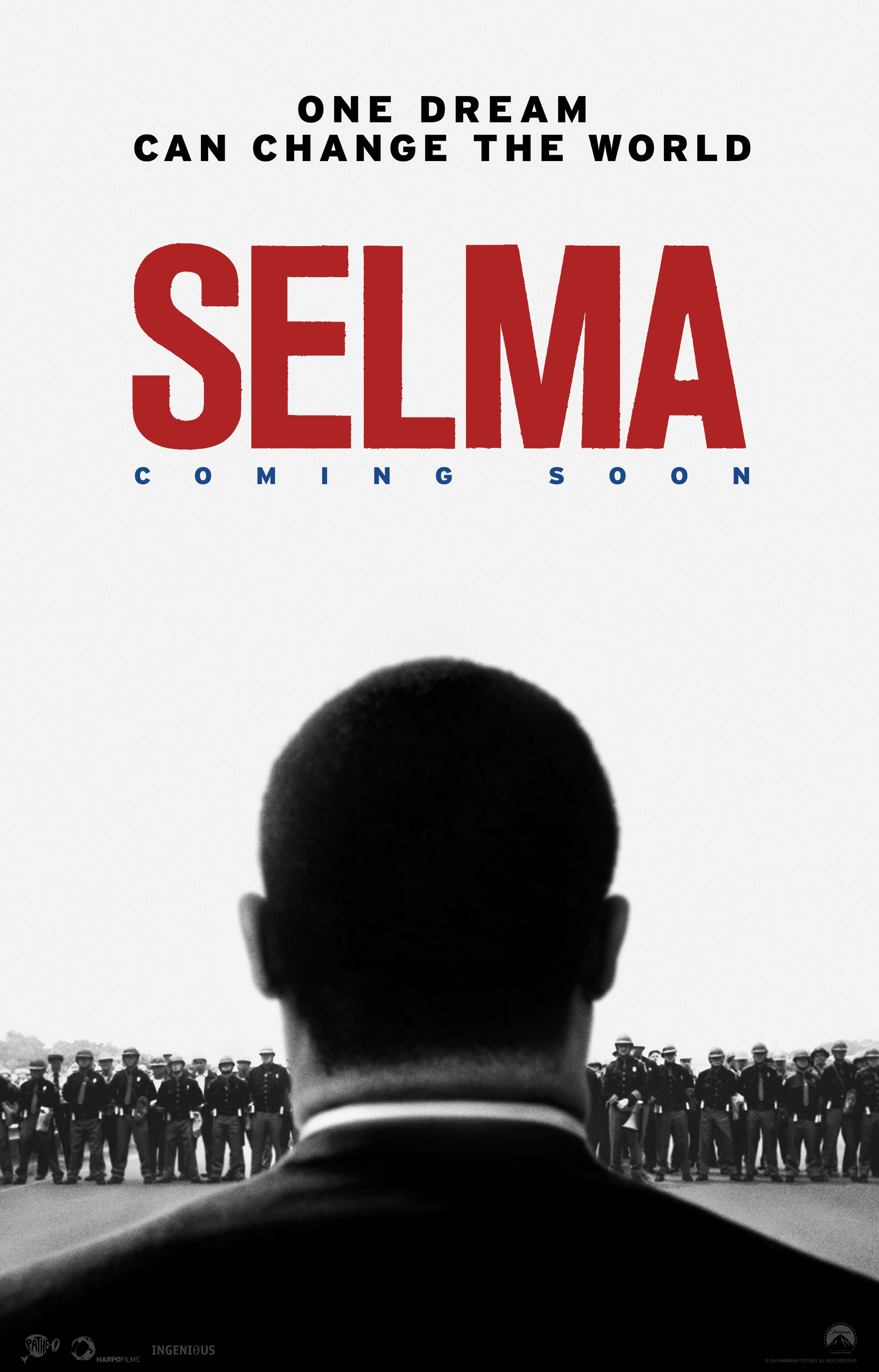
David Oyelowo
Tom Wilkinson
Carmen Ejogo
Tim Roth
Oprah Winfrey
Paul Webb
128 mins.
Biography, Drama, History
December 25, 2014
Rated PG-13 for disturbing thematic material including violence, a suggestive moment, and brief strong language. (MPAA)
Ava DuVernay’s “Selma” is just that: hers. Her directorial DNA is all over this. What surprises me most about this film is its quietness, its subtlety. This is not a rousing historical epic; it’s an introspective, understated piece of art. It reminds me, once again, that introversion is power.
From the beginning, DuVernay introduces us to Dr. King and his wife, Coretta Scott King. They aren’t canonized historical figures on display. They’re people, just people who happen to be thrust upon the world’s stage. We see their relationship before us with hints that there are many layers beneath its surface.
The opening of this film is disarming. You don’t get what you expect. When Oprah first appears onscreen as Annie Lee Cooper, you forget that it’s Oprah during many of the scene’s moments. Your focus is on the words and the actions, on the people, not on anything else. DuVernay forces us to see the humanity in all of the characters, regardless of their points of view. That’s the quiet power here. This is a quiet storm. This is a film that sneaks up on you. By the time we get to Cager Lee’s most important scene, during which he speaks to Dr. King after a tragedy, all of DuVernay’s subtleties pay off big time. The buildup to that moment is masterful, but you aren’t aware of it until you get to that scene. The weight of it lays on your heart. DuVernay creates other buildups before the end, as well.
As for the cinematography by Bradford Young and the music, which was supervised by Morgan Rhodes, they are just right. The images have a gauziness that evokes the time period. The music also evokes the time period, but the songs aren’t obvious selections. The songs have been carefully chosen. The screenplay is a deft mix of storytelling and history. You learn without thinking about it. Every reference to history has a purpose; each reference reveals something about the characters or contributes to the plot. Paul Webb’s script is served well by DuVernay. Her knowledge of history shines through. Even when the film deviates from what actually happened, it serves a purpose. It captures the essence of the characters. If you want precise history, be sure to live through it. Even then, you won’t get it.
As for the actors, they’re all wonderful. DuVernay has shown that she can direct actors and develop characters before: Check out her previous two low-budget indie films, “I Will Follow” and “Middle of Nowhere.” Her ability to keep that sensibility with a higher budget is a testament to her confidence and belief in her directorial perspective. She has created a singular historical film, one that makes you identify with the characters as people rather than think of them as icons. Dr. King is no saint; we get that here. However, he’s not a villain or even someone worthy of contempt. He’s just a man who has made many mistakes, but who also has a gift. Heroes are flawed; they’re heroic in spite of their flaws. Also, they’re allowed to be heroic by the people who know and love them.
David Oyelowo, as Dr. King, brings out the humanity in King. Oyelowo doesn’t disappear inside of the character; he provides his own take on King, instead. He is much more like Meryl Streep than Jamie Foxx in that way. This is very helpful, especially in this film, because it’s much easier to see King for who he really was: a man with a sharp intellect and even sharper instincts, who harbors doubts that give him pause without paralyzing him. Also, Oyelowo doesn’t overshadow the film itself. He isn’t larger than life: That’s the point. Stephan James, as John Lewis, nails it. Henry G. Sanders, as Cager Lee, is magnificent. He gets to the truth of his character’s situation without overplaying one moment. None of the moments are overplayed, by the way. That’s what’s so astonishing about this film: its assured restraint. That restraint allows the audience to get inside the film. It grabs you gently and never lets go. Carmen Ejogo, playing Coretta Scott King once more (HBO’s “Boycott” was her first foray into the character), seems to have tapped into Coretta’s spirit. She not only conveys Coretta’s quiet intelligence, but also bears a striking resemblance to her. She both looks like Coretta and feels like her.
Colman Domingo, André Holland, Niecy Nash, Omar Dorsey, Ruben Santiago Hudson, Jr., Tessa Thompson, Lorraine Toussaint, Wendell Pierce, Tom Wilkinson, Giovanni Ribisi, Tim Roth, Dylan Baker, Stephen Root, and the rest of the cast inhabit their characters fully without much dialogue. They and DuVernay get the point across with baffling simplicity. Holland, as Andrew Young, delivers one of the best and most concise arguments for non-violent “direct action” that I’ve ever heard when he cautions a man bent on retaliation. You forget about the acting in that moment. What lingers is the message. Even Common doesn’t seem to be trying in this film; he’s just another guy who has his part to play. I hope that Common has learned something from making this film. Hopefully, he’ll learn to trust that the thought is enough. Cuba Gooding, Jr. and Martin Sheen also appear, late in the film, but even they don’t overwhelm it … and they could have.
Some may not be fully satisfied with “Selma.” They may come away from it with bemused expressions, because they expected to be blown away going in. This isn’t that kind of film. It implodes; it sidles up to you; it creeps under your skin. That’s its most important distinction. You won’t forget it, and not just because of its potent relevance to today’s time. It’s an unsettling reminder of what makes us human. We live in grays, even though, at times, we may wish that things were black and white. Nothing is cut and dry.
Verdict: Great
About: (Source: selmamovie.com)
SELMA is the story of a movement. The film chronicles the tumultuous three-month period in 1965, when Dr. Martin Luther King, Jr. led a dangerous campaign to secure equal voting rights in the face of violent opposition. The epic march from Selma to Montgomery culminated in President Johnson (Tom Wilkinson) signing the Voting Rights Act of 1965, one of the most significant victories for the civil rights movement. Director Ava DuVernay’s SELMA tells the real story of how the revered leader and visionary Dr. Martin Luther King Jr. (David Oyelowo) and his brothers and sisters in the movement prompted change that forever altered history.


