
Black Box
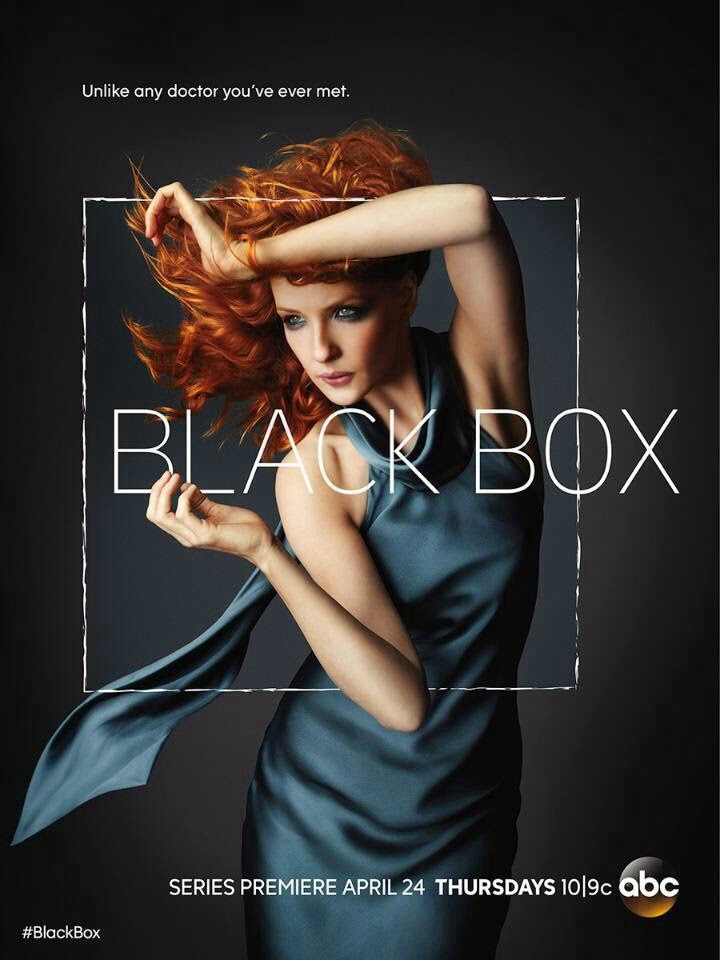
Kelly Reilly
Ditch Davey
David Ajala
Ali Wong
Laura Fraser
David Chisum
Siobhan Williams
Terry Kinney
Vanessa Redgrave
Created by:
Amy Holden Jones
2014
Drama
ABC
TV-14
“Black Box” comes across as a solidly acted TV drama with pacing that’s just right (not too fast and not too slow). But, while the writing’s professionally done, it doesn’t go the extra mile. There needs to be more risk in its presentation to match its main character’s changing states of mind. I want it to feel less safe; I want to feel the danger.
ABC calls this show groundbreaking, but I don’t agree. Yes, the central character (Dr. Catherine Black played by Kelly Reilly) is a neuroscientist with bipolar disorder: She’s a mentally ill doctor who helps the mentally ill. But there are other shows, most notably on NBC recently, that do similar things: “The Blacklist” features an international criminal who helps the government hunt down other international criminals, and “Hannibal” features a psychopathic psychiatrist. These are just two of the TV shows that feature a character who has the very characteristic that he or she is trying to either hunt down or treat in others.
In the first episode of “Black Box,” we’re told and shown a lot of Dr. Black’s backstory; but we don’t really gain any insight along with that information. It just seems to skim the surface. They may have planned to develop things in the future, but this show needs to let go to be truly effective.
As it is, the scenes between Redgrave and Reilly are the most interesting; they have a nice rhythm together. Dr. Black’s relationship with her boyfriend and eventual fiancé (played by David Ajala) also has some potential. However, the scenes of her at work are hit or miss; the patient she treats determines how good those scenes are. In that way, “Black Box” is similar to many other medical procedurals; but it doesn’t feel like one.
Since Dr. Black has a brilliant but diseased (bipolar) mind, the use of jazz music in the score is smart. However, the style of the show needs to match the improvisational quality of that music. After all, the title refers to both the human mind and the main character. Each seems to deserve a more complex presentation. Maybe we’ll get it as the episodes progress. Based on the first episode, “Black Box” is just good enough. …
In its second episode, “Black Box” doesn’t show much progress. The presentation is just too familiar; it’s woefully uninspired. I don’t care about anyone in this show. There are some good fragments and some not-so good fragments. Those fragments don’t create a compelling whole. This show lacks tension; it doesn’t seem to be building to anything interesting. It’s OK, but it doesn’t even scratch the surface of what it could be.
(By the way, the sporadic dancing by Dr. Black doesn’t work. I get it, but it doesn’t credibly reinforce Black’s mania.)
Verdict: OK
About: (Source: blackbox)
The twenty-first century is the era of the brain, and this show will be riding that wave on the cutting edge of medicine. The brain is the source of everything — from whom we love to how we act and feel. It is the ultimate mystery, which is why doctors call it, the “black box.” Catherine and the staff of “The Cube” will constantly be challenged by cases never seen before on television. The patients have rare, highly visual, often hallucinogenic and startling conditions, which we will see through their eyes as Catherine diagnoses and treats them.

